
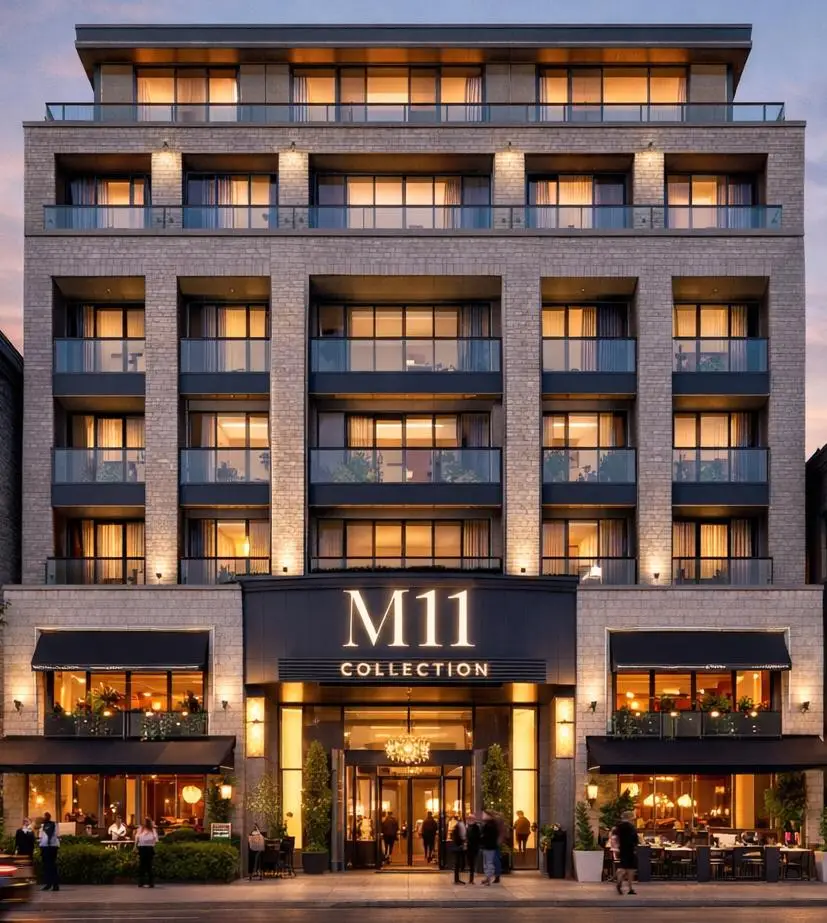
Every city has them – buildings that sit below their potential. A duplex on a prime corridor that could hold four units. A mid-rise residential building with outdated layouts and below-market rents. A commercial property in a transitioning neighborhood that no one has reimagined yet.
Value-add real estate development is the discipline of identifying these opportunities and executing on them. It requires more than capital. It demands a sharp eye for what a property could become, the operational expertise to get it there, and the patience to see it through.
At Mahbod Group, value-add development is not a side strategy – it is the foundation of everything we build.
What Is Value-Add Real Estate Development?
Value-add real estate refers to acquiring properties that are underperforming relative to their location, zoning potential, or market conditions, and then improving them through renovation, conversion, or expansion to increase both rental income and long-term asset value.
Unlike ground-up development, which starts from an empty lot, value-add projects work with existing structures. The building is already there. The opportunity lies in what it could become with the right investment and execution.
This strategy sits between core investments (stable, fully leased properties) and opportunistic plays (high-risk, high-reward). Value-add offers a compelling middle ground: properties with clear upside that can be unlocked through hands-on repositioning.
For investors and partners, value-add development offers several advantages:
- Higher returns than stabilized assets because you are buying below market value and creating equity through improvements
- Lower risk than ground-up construction because the building, location, and neighborhood fundamentals are already proven
- Faster stabilization timelines compared to new builds, since the property is already generating some income during the repositioning process
How Mahbod Group Approaches Property Repositioning
Not every underperforming building is a good value-add opportunity. The difference between a successful repositioning and a costly mistake comes down to due diligence, market knowledge, and execution discipline.
Mahbod Group evaluates every potential acquisition through a structured lens:
Location fundamentals come first. A property in a growing urban neighborhood with strong transit access, walkability, and demographic trends will always outperform a cheaper building in a declining area. Montreal’s evolving neighborhoods – from the Plateau to Mile End to Villeray – offer concentrated pockets of opportunity for investors who understand local dynamics.
Zoning and conversion potential matter. A duplex on a street zoned for higher density is not just a duplex – it is a four-plex waiting to happen. Understanding municipal zoning, permit processes, and what a property’s legal envelope allows is critical to underwriting the real upside of any deal.
Operational improvements drive returns. Renovating units, improving common areas, upgrading building systems, and professionalizing management can significantly increase rental income without changing the building’s footprint. Sometimes the best value-add play is simply running a property better than the previous owner did.
Real-World Examples of Value-Add Development
Mahbod Group’s portfolio illustrates how this strategy plays out in practice across different property types and scales.
366 Mont-Royal was acquired as a duplex and converted into a four-unit residential building. By leveraging the property’s zoning allowances and investing in a thoughtful conversion, the asset’s income potential doubled while adding housing supply to one of Montreal’s most desirable corridors.
1755–1757 St-Denis started as a 12-unit building. Through strategic repositioning – reconfiguring layouts, renovating units, and optimizing underused space – Mahbod Group expanded the property to 15 units. Three additional units of income from the same building footprint represents a significant increase in asset value.
4855–4865 Bourret is the largest repositioning project in the portfolio to date. Acquired as a 55-unit building, it is being transformed into a 73-unit asset. A project of this scale requires coordinating construction, tenant relations, municipal approvals, and financing – all while keeping the building operational. The result is an 18-unit increase that fundamentally changes the property’s financial profile.
Each of these projects followed the same core principle: acquire a property with clear upside, execute a disciplined improvement plan, and hold for long-term value.
Why Montreal Is a Strong Market for Value-Add Investment
Montreal offers a unique combination of factors that make it particularly attractive for value-add real estate development.
Relative affordability compared to other major Canadian cities. While Toronto and Vancouver have seen price compression that makes value-add math increasingly difficult, Montreal still offers acquisition pricing where the numbers work – especially in transitioning neighborhoods with strong fundamentals.
A deep inventory of aging multi-residential stock. Montreal’s housing supply includes thousands of duplexes, triplexes, and walk-up apartment buildings that were built decades ago and have not been significantly updated. For investors willing to do the work, this aging stock represents a pipeline of repositioning opportunities.
Strong rental demand driven by population growth, immigration, and university enrollment. Montreal’s rental vacancy rates remain low, and demand for quality, well-managed rental housing continues to grow – exactly the kind of product value-add development creates.
A regulatory environment that, while complex, rewards investors who understand it. Montreal’s zoning codes, permit processes, and rental regulations require expertise to navigate, but they also create barriers to entry that protect well-positioned operators from excessive competition.
Frequently Asked Questions About Value-Add Real Estate
How long does a typical value-add repositioning take?
Timelines vary by project scope. A unit renovation program in a mid-rise building might take 12 to 18 months. A full conversion – like turning a duplex into a four-plex – typically runs 6 to 12 months including permits and construction. Larger projects like the Bourret repositioning can span 18 to 24 months.
What kind of returns does value-add development generate?
Returns depend on acquisition price, renovation costs, and the rental market. Generally, value-add investors target returns that exceed what stabilized, fully leased properties offer, because the improvement process creates equity that did not exist at acquisition. The trade-off is active management and execution risk.
Is value-add development risky?
All real estate investment carries risk. Value-add mitigates some of that risk by working with existing, income-producing properties rather than building from scratch. The key risk factors are renovation cost overruns, longer-than-expected lease-up periods, and market shifts. Disciplined underwriting and experienced execution reduce these risks significantly.
What is the difference between value-add and opportunistic real estate?
Value-add properties are underperforming but functional – they generate some income and need improvement. Opportunistic deals are higher risk: distressed assets, ground-up development, or properties requiring complete overhauls. Value-add sits in the middle of the risk-return spectrum.
Value-add real estate development is not about flipping properties for short-term gains. It is about identifying assets with genuine potential, investing in their improvement, and holding them as part of a portfolio built for long-term performance.
Mahbod Group’s track record – from duplexes to 73-unit buildings – reflects this philosophy. Every project starts with the same question: what could this property become with the right vision and execution?
For investors, partners, and communities, the answer creates value that compounds over time.